
Meal Planning for Weight Loss and Improved Overall Health
Losing weight can feel like a confusing puzzle. With countless diets, meal plans, and health advice floating around, it’s easy to get overwhelmed. The truth is, weight loss doesn’t have to be complicated. One of the most effective strategies is balanced meal planning. This approach doesn’t focus on extreme restrictions or miracle foods. Instead, it emphasizes variety, portion control, and the right mix of nutrients to help you lose weight steadily and sustainably.
What Is Balanced Meal Planning?
Balanced meal planning is about creating meals that include a healthy combination of protein, carbohydrates, fats, and fiber. Each meal should provide enough energy, keep you satisfied, and support your body’s nutritional needs. Unlike crash diets, balanced meals focus on long-term health, not short-term weight loss.
A typical balanced meal includes:
- Protein: Chicken, fish, eggs, tofu, beans, or Greek yogurt. Protein keeps you full longer and helps preserve muscle during weight loss.
- Carbohydrates: Whole grains, fruits, and vegetables. Carbs are your body’s main energy source and should not be completely eliminated.
- Healthy Fats: Avocado, nuts, seeds, and olive oil. Healthy fats support hormone function and keep you feeling satisfied.
- Fiber: Vegetables, fruits, legumes, and whole grains. Fiber slows digestion, prevents blood sugar spikes, and aids in digestion.
- Water: Hydration is essential for metabolism and can help control appetite.
By combining these elements in each meal, you reduce cravings, avoid overeating, and provide your body with everything it needs to function well while losing weight.
Why Balanced Meals Are Key for Weight Loss
Many people make the mistake of cutting calories drastically or skipping meals. While this may lead to initial weight loss, it is usually temporary and often results in fatigue, nutrient deficiencies, and rebound weight gain. Balanced meals prevent these problems by:
- Regulating Blood Sugar: A mix of protein, fiber, and healthy fats helps prevent spikes and crashes in blood sugar, which often trigger cravings for sugary snacks.
- Reducing Hunger: Protein and fiber are filling, so you’re less likely to overeat between meals.
- Boosting Metabolism: Adequate protein helps preserve lean muscle, which burns more calories than fat.
- Providing Nutrients: Balanced meals ensure your body gets essential vitamins and minerals, supporting overall health.
- Sustainable Habits: When meals are satisfying and nutritious, it’s easier to stick to a weight loss plan long-term.
How to Plan Balanced Meals
Meal planning doesn’t have to be complicated. Here are steps to create balanced meals for weight loss:
1. Set Your Goals
Before planning meals, determine your weight loss goals. Are you looking to lose a few kilograms, improve health markers, or build lean muscle while losing fat? Knowing your goal will help you set the right calorie target and macronutrient balance.
2. Understand Portion Sizes
Even healthy foods can lead to weight gain if portions are too large. Using simple methods can help:
- Fill half your plate with vegetables.
- Fill one-quarter with protein.
- Fill one-quarter with whole grains or starchy vegetables.
- Add a small portion of healthy fats.
This visual guide keeps meals balanced without requiring detailed calorie counting.
3. Choose Nutrient-Dense Foods
Focus on foods that provide high nutrition without excess calories. Examples include:
- Proteins: Lean meats, fish, eggs, lentils, chickpeas, tempeh.
- Carbs: Quinoa, brown rice, oats, sweet potatoes, fruits, vegetables.
- Fats: Olive oil, nuts, seeds, fatty fish.
- Extras: Herbs, spices, and low-calorie sauces for flavor.
Avoid heavily processed foods, sugary drinks, and snacks high in empty calories.

4. Plan Your Meals in Advance
Spend a few minutes each week deciding what to eat. Planning reduces last-minute unhealthy choices. Tips:
- Cook in batches and store meals in the fridge or freezer.
- Keep healthy snacks like fruits, nuts, or yogurt ready.
- Rotate recipes to prevent boredom.
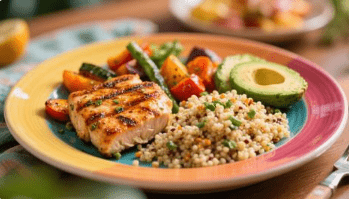
Even simple meals like grilled chicken with quinoa and roasted vegetables can be satisfying and effective for weight loss.
5. Listen to Your Body
Meal planning isn’t about strict rules. Pay attention to hunger and fullness cues. Eat when hungry, stop when satisfied. Over time, this helps regulate natural appetite and reduces overeating.
Sample Balanced Meal Plan
Here’s an example of a day filled with balanced meals:
Breakfast:
- Scrambled eggs with spinach and tomatoes
- Whole grain toast
- A small handful of berries
- Green tea or water
Snack:
- Greek yogurt with a teaspoon of chia seeds
- Sliced apple
Lunch:
- Grilled salmon
- Quinoa or brown rice
- Steamed broccoli and carrots
- Olive oil drizzle
Snack:
- A small handful of almonds
- Carrot sticks or cucumber slices
Dinner:
- Lean turkey or tofu stir-fry with bell peppers and zucchini
- Cauliflower rice or whole grain noodles
- Side salad with olive oil and lemon dressing
Optional Evening Snack:
- Herbal tea
- A few slices of avocado or a small fruit
This meal plan combines protein, carbs, fats, and fiber in a way that keeps you full, nourished, and on track for weight loss.
Tips for Making Meal Planning Easier
- Use Simple Recipes: Don’t overcomplicate cooking. Simple meals often have fewer calories and more nutrients.
- Prep Ingredients Ahead: Chop vegetables or cook proteins in advance to save time.
- Keep a Food Journal: Track meals and snacks to stay mindful of portions and nutrient balance.
- Experiment with Flavors: Herbs, spices, vinegar, and citrus add taste without extra calories.
- Stay Flexible: Don’t stress if you deviate occasionally. Balanced meal planning allows occasional treats without guilt.
Common Mistakes to Avoid
Even with a plan, people sometimes sabotage their weight loss efforts. Avoid these pitfalls:
- Skipping Meals: Leads to overeating later. Balanced snacks prevent this.
- Relying on Diet Foods: Many “low-calorie” products are high in sugar or artificial additives.
- Ignoring Healthy Fats: Fats keep you full and support metabolism.
- Overcomplicating Planning: Aim for simple meals you enjoy. Complicated rules are hard to stick to.
- Neglecting Hydration: Water helps digestion, supports metabolism, and can reduce hunger.
Long-Term Benefits
Balanced meal planning isn’t just about losing weight. It can:
- Improve energy levels and mood.
- Support heart health with fiber and healthy fats.
- Reduce risk of chronic diseases like diabetes.
- Build healthy eating habits that last a lifetime.
By focusing on balance instead of restriction, you can create a sustainable lifestyle that naturally promotes weight loss.

Conclusion
Weight loss doesn’t have to mean eating bland foods or following extreme diets. Balanced meal planning provides a simple, flexible approach that keeps you full, nourished, and motivated. By including protein, healthy fats, fiber, and complex carbohydrates in each meal, you can reduce cravings, stabilize blood sugar, and gradually shed weight.
The key is planning ahead, listening to your body, and keeping meals simple yet satisfying. Over time, these habits not only help you lose weight but also improve your overall health and well-being. Start small, plan smart, and enjoy the process of fueling your body the right way. Your weight loss journey can be effective, sustainable, and even enjoyable with the right approach.