
Full-body Strength Training Routines
Strength training is one of the most effective ways to build a healthy, strong body. While many people think of lifting weights at the gym, full-body strength training routines can also be done at home or with minimal equipment. These routines are not just for athletes or fitness fanatics—they’re for anyone who wants to move better, feel stronger, and improve overall health.
In this guide, we’ll cover the essentials of full-body strength training, why it’s worth your time, and simple routines you can start using today.
Why Full-Body Strength Training Matters
Strength training has benefits that go far beyond muscles. It improves bone density, joint health, posture, and even mental well-being. Unlike cardio workouts that focus mainly on endurance, strength training builds power and stability that carry over into daily life.
By working the entire body in a single session, you maximize efficiency. Instead of splitting workouts into “arm day” or “leg day,” you target all major muscle groups at once. This is especially helpful if you’re short on time or only train a few days a week.
Another reason to choose full-body routines is balance. Many beginners focus only on visible muscles like the chest or biceps, ignoring the back, legs, or core. This imbalance can cause poor posture, injuries, or limited progress. Full-body workouts solve that by training everything evenly.
Finally, strength training revs up your metabolism. Muscles burn more energy than fat, even at rest. By building lean muscle across the body, you’ll burn calories more efficiently, making weight management easier in the long run.
Key Exercises For A Full-Body Routine
The heart of full-body training lies in compound movements. These are exercises that engage multiple muscles and joints at the same time. They give the best “bang for your buck” and mimic real-life movements like lifting, pushing, or bending.
Here are some of the most effective:
Squats
The squat is a king among exercises. It strengthens the legs, glutes, and core while improving balance. Stand with feet shoulder-width apart, lower your hips like sitting in a chair, then return to standing. Variations include bodyweight squats, goblet squats with a dumbbell, or barbell back squats.
Deadlifts
Deadlifts target the hamstrings, glutes, lower back, and grip strength. Stand with feet hip-width apart, hinge at the hips, and lift a weight from the floor while keeping your back straight. Beginners can start with lighter weights or use resistance bands.
Push-Ups
Push-ups are a bodyweight staple. They work the chest, shoulders, triceps, and core. Start in plank position, lower your body until the chest nearly touches the ground, then push back up. Beginners can modify with knee push-ups or wall push-ups.
Pull-Ups or Rows
Pull-ups strengthen the back and arms, but they’re challenging at first. Rows (using dumbbells, bands, or a bar) are a great alternative. Both exercises balance out pushing movements like push-ups by targeting the pulling muscles.
Planks
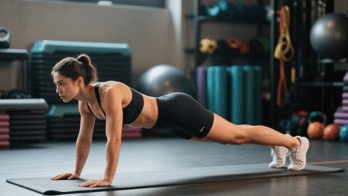
The plank is one of the best core exercises. It builds stability and endurance across the abs, obliques, and lower back. Hold your body in a straight line, resting on forearms and toes. Start small—20 to 30 seconds is enough for beginners.
Overhead Press
This move strengthens shoulders and arms while engaging the core for balance. Use dumbbells, a barbell, or even household items like water bottles. Press upward from shoulder height until arms are extended, then lower with control.
When combined, these exercises form the backbone of an effective routine. Each move targets different muscle groups, ensuring the whole body is engaged.

Sample Full-Body Strength Training Routine
Here’s a simple, balanced workout you can follow 2–3 times a week. Adjust sets, reps, and rest periods depending on your fitness level. Beginners should aim for 2 sets of each exercise with longer rests. As you get stronger, progress to 3–4 sets with shorter rests.
Warm-Up (5 minutes):
- March in place or jog lightly.
- Arm circles, hip rotations, and gentle stretching.
Workout (30–40 minutes):
- Squats – 3 sets of 12 reps
- Push-Ups – 3 sets of 8–12 reps
- Deadlifts – 3 sets of 10 reps (with light weights or bands)
- Rows – 3 sets of 12 reps
- Planks – 2–3 sets, 20–40 seconds each
- Overhead Press – 3 sets of 10 reps
Cool Down (5 minutes):
- Stretch hamstrings, quads, chest, and shoulders.
- Focus on slow breathing and muscle relaxation.
This routine covers all major muscle groups in one session. It’s simple enough for beginners but scalable for more advanced lifters by adding weight, reps, or sets.
Staying Consistent And Making Progress
The hardest part of any workout program isn’t the exercises—it’s sticking with it. Motivation fades, but habits last. Here are tips to stay consistent with your full-body training routine:
- Set a schedule: Pick 2–3 specific days per week and stick to them.
- Track your progress: Write down weights, reps, or time held. Small improvements add up.
- Listen to your body: Rest when sore, but don’t confuse soreness with injury.
- Progress gradually: Increase weights or reps slowly to avoid burnout.
- Mix it up: Rotate variations of squats, push-ups, or planks to keep things fresh.
Most importantly, remember that strength training is a long-term investment. Don’t chase quick results. Think about how stronger legs will help you climb stairs, how a stable core prevents back pain, and how stronger arms make lifting groceries easier. These real-life benefits matter just as much as visible muscles.
Building A Stronger You
Full-body strength training routines are the perfect balance of efficiency and effectiveness. They train every major muscle group, improve posture, and make daily movements easier. With just a few exercises, you can create workouts that challenge your body and mind while fitting into a busy schedule.
Start simple, master the basics, and stay consistent. Over time, you’ll notice your body becoming stronger, your energy improving, and your confidence growing. Strength training isn’t about lifting the heaviest weights—it’s about building a body that supports you in every part of life.